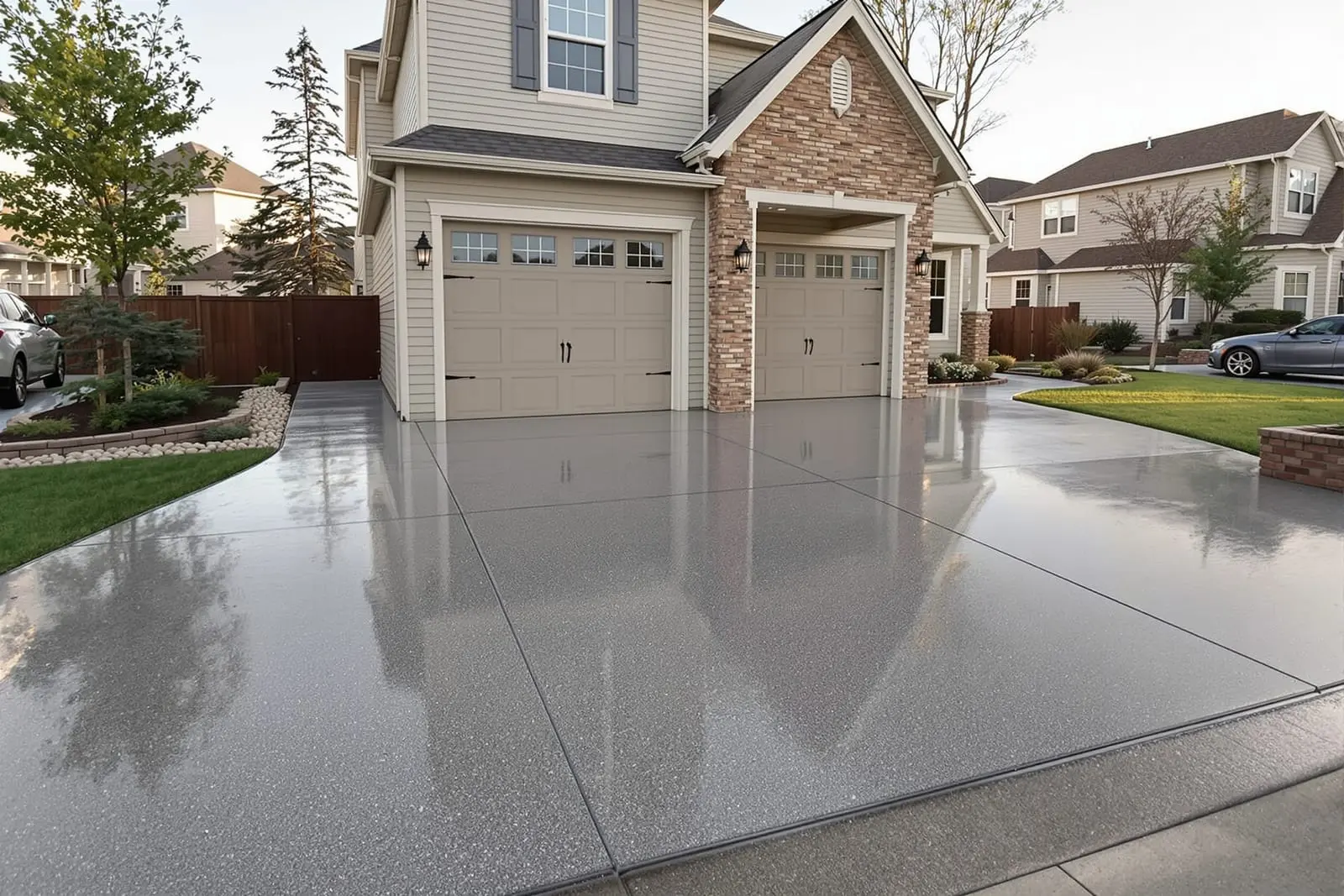
Upgrade your interior slabs with new concrete garage floor installation in St Louis, MO. We pour level, reinforced floors that stand up to vehicles and storage. Basement floor projects include moisture control and smooth finishes. Create clean, usable space with professionally installed concrete floors.
Vanguard Concrete St. Louis provides professional concrete garage floor throughout St Louis, MO and the surrounding area. Our licensed, insured crew delivers safe, clean, on-time work with a free estimate before anything begins. Call (314) 788-2998 or request your free quote.
Durable concrete garage floor solutions for St Louis homes
A concrete garage floor in St Louis has to do more than just look smooth. It deals with winter road salt, hot tire pickup in the summer, and clay soil that likes to move when it gets wet. At Vanguard Concrete St. Louis, we design and install garage and basement floors with these local conditions in mind, not a one-size-fits-all approach.
When you call us out, we start by looking at how your garage or basement is used. For some homeowners, the garage is a workshop that needs a brighter, low-dust surface. Others just want a solid, low-maintenance floor that will not flake or crack apart under vehicles. In basements, we often plan ahead for future finishing, like walls, drains, or radiant heat. We talk through what will sit on the floor, how often it gets wet, and whether you plan to add coatings or flooring later.
We then match the concrete mix, reinforcement, and finish to your goals. A simple storage garage gets a different treatment than a high-end hobby shop or a basement that will be turned into living space. This upfront planning helps avoid expensive do-overs and gives you a floor that actually fits what you use it for.
How we install a concrete garage floor that lasts in our climate
The way a concrete garage floor is built matters more than the brand of sealer on top. Vanguard Concrete St. Louis follows a clear process so your floor can handle freeze-thaw cycles, salt, and vehicle loads.
First, we evaluate the existing base. If it is a new build, we confirm compaction and add or correct the gravel base if needed. For tear-out and replacement, we remove old concrete, haul it off, and re-compact the subgrade. In many St Louis neighborhoods, soils hold water, so we usually install a compacted rock base to reduce heaving and settlement.
Second, we set the correct thickness and reinforcement. For most attached garages we pour 4 to 5 inches of concrete, with a higher strength mix in drive-through bays or where trucks are parked. We commonly use welded wire mesh or rebar, and in some cases we add fiber reinforcement to control shrinkage cracking. For basements, the thickness and reinforcement depend on plumbing layouts and future wall locations.
Third, we set slopes and elevations carefully. Garage slabs are typically pitched slightly toward the overhead door so melting snow and water run out instead of toward the house. In basements with floor drains, we form gentle slopes so water finds the drain but the floor still feels level under furniture and flooring.
Finally, we place and finish the concrete. We pour, screed, and bull float to remove air pockets, then steel trowel or broom finish depending on the use. Timing is critical. We do not rush the finishing or start too early, which are common causes of weak, flaky surfaces. Proper curing, using either curing compounds or wet cure methods, increases strength and reduces surface dusting.
Concrete options: from basic slab to workshop-grade floor
Not every concrete garage floor or basement needs the same mix or finish. Vanguard Concrete St. Louis offers options that are practical and tied to how you actually live and work, rather than simply upselling coatings.
For garages used mainly for parking and storage, a standard broom-finished slab with control joints cut in the right pattern is often the best value. The broom texture improves traction when the floor is wet from snowmelt. We usually recommend a penetrating sealer for these floors to help resist road salt and oil stains.
For workshop or hobby garages, we can trowel the surface tighter for a smoother, easier-to-sweep finish. If you plan to add an epoxy or polyaspartic coating, we pour a slab with this in mind, including the right finish profile and joint layout so the coating can perform well later. We can also add extra thickness at lift locations or under heavy equipment.
Basement floors often serve multiple roles, from storage to future living space. In those cases, we pay close attention to flatness so vinyl plank, tile, or engineered wood installs without a lot of floor prep. We can also install insulation and vapor barriers under the slab if you want a warmer, dryer basement. For homeowners planning radiant heat, we coordinate the pour around tubing layout and protection so nothing gets damaged during installation.
What drives the cost of garage and basement floors in St Louis
Pricing a concrete garage floor or basement slab in St Louis is not just about square footage. Vanguard Concrete St. Louis walks you through the specifics so you know where your money goes and where it does not need to.
Key cost drivers include slab thickness, concrete strength, and reinforcement. A lightly loaded basement storage area might work at 4 inches with standard reinforcement, while a garage that sees full-size trucks or work vans may need 5 inches and a higher strength mix. Those decisions affect both material and labor costs.
Access and removal are another major factor. Tearing out an old slab in a tight city lot with limited truck access takes more time and sometimes smaller equipment. Conversely, a new construction slab in a wide open subdivision is more straightforward. We note things like narrow alleys, fences, and landscaping that should be protected when we price the job.
Drainage and moisture control can also add or reduce cost. Adding interior trench drains, extra rock base, or under-slab vapor barriers will cost more upfront but can prevent larger problems later, such as heaving, standing water, or moldy basement finishes. We explain options clearly so you can decide what is worth including now and what could be postponed.
Finally, finish level affects price. A simple broom finish and saw-cut joints are more budget friendly than high-spec flatness for specialty flooring or custom edges around steps and equipment pads. We provide itemized proposals so you can see how different choices change the final number.
Common garage and basement slab problems we see locally
Working across St Louis and the surrounding suburbs, we repeatedly see the same issues with older concrete garage floors and basement slabs. Knowing these patterns helps you decide whether to repair or replace.
In garages, a typical complaint is surface flaking or pitting, especially near the overhead door where salt-laden slush melts and refreezes. This often comes from poor air entrainment in the original mix or from finishing practices that trapped water at the surface. In many cases, the damage is too deep for a simple skim coat, so we evaluate whether partial or full replacement is needed.
Another recurring problem is settlement near the house wall or at the front foundation. As clay soils shrink and swell, unsupported edges sink or heave. You might notice a lip at the entry from the driveway or water that runs toward your foundation instead of away. We look at the base conditions, then decide whether to mudjack, foam lift, or remove and re-pour sections with improved base compaction and drainage.
In basements, moisture is the biggest issue. We often see slabs poured without an effective vapor barrier or with inadequate drainage around the foundation. That can lead to cold, damp floors or efflorescence (white powdery deposits). When we install new slabs, we address moisture from the bottom up with vapor barriers, proper base material, and, when appropriate, sump systems or interior drains coordinated with your waterproofing contractor.
What to know before hiring a concrete contractor for this work
Before you hire anyone for a concrete garage floor or basement project in St Louis, there are a few details that can protect your investment. Vanguard Concrete St. Louis encourages homeowners to ask us, and any contractor, specific questions instead of relying only on price.
First, ask about base preparation. A well compacted rock base is essential on our local soils. A cheap bid that skips this step usually means cracks, heaving, or hollow spots later. Have the contractor explain exactly what base material will be used and how it will be compacted.
Second, get details on mix design and reinforcement. You do not need to be an engineer, but you should know the planned slab thickness, PSI rating of the concrete, and reinforcement type. If the answer is vague, that is a red flag. For garages that see vehicles, we are happy to put these specs in writing.
Third, talk about curing and joint layout. Control joints help manage where cracks form and need to be spaced and cut correctly for the slab thickness. Curing should be described too, including how long the contractor wants you to keep vehicles off the new floor and what, if any, curing compound they plan to use.
Last, verify local references. Floors in St Louis deal with different conditions than floors in drier or warmer regions, so experience here matters. We can point you to completed garage and basement concrete floors in your part of town so you can see how they are holding up.
Why neighbors choose Vanguard Concrete St. Louis
Vanguard Concrete St. Louis is built around the idea that good concrete work should fit the house, the soil, and the way the owner uses the space. We focus on garage and basement slabs because they form the foundation of so much of your daily life, from parking and storage to kids playing in a finished basement.
Our crew is local, so we understand how a winter of freeze-thaw cycles can punish a marginal garage slab, and how a wet spring can expose a poorly prepared basement floor. We use that experience to recommend details that might not be obvious from a catalog or national guidebook, such as when to upgrade to air-entrained concrete, how much slope works best in a mixed parking and workshop space, and when to combine slab work with drainage improvements.
We also respect your time and property. That means showing up when we say we will, protecting adjacent surfaces, keeping you informed if weather changes the pour schedule, and leaving the site clean when we are finished. Many of our projects come from referrals by past clients who appreciate that their new concrete garage floor or basement slab looks good and performs well years later.
If you are considering new concrete for a garage or basement, or you are not sure whether an existing slab can be saved, we are glad to visit, explain your options in plain language, and provide a detailed written estimate before any work begins.
“
Professional garage & basement concrete floors, done right the first time, quality materials, honest pricing, and results that last.
Vanguard Concrete St. Louis
Garage & Basement Concrete Floors Across Our Service Area